
The Past and Present “Cultural Symbols” of Yokohama Chinatown
Shouwen Tan
As Asia’s largest Chinatown, Yokohama Chinatown (Figure 1) presents itself as a vibrant cultural symbol space. Its cultural landscape is not a mere replication of Chinese culture, but rather a symbolic representation system formed over a century, embodying the complex process of cultural adaptation and identity construction in the era of globalization. As East Asia’s most representative immigrant cultural space, Yokohama Chinatown demonstrates the complex process of cultural transplantation and re-creation through distinctive symbolic practices. This district, spanning merely 0.2 square kilometers, attracts over 20 million visitors annually, establishing itself as a quintessential case study for examining cultural localization.
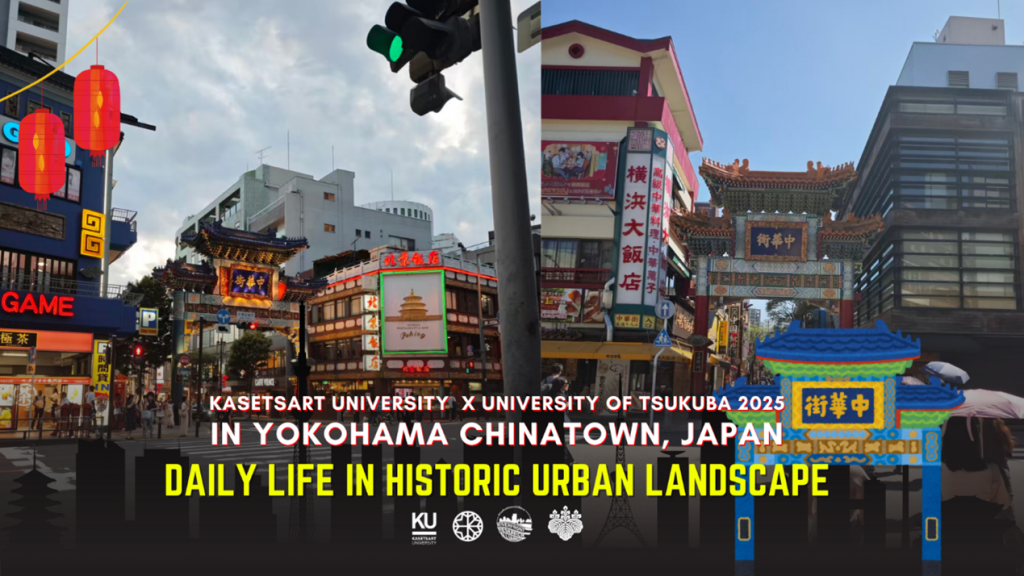
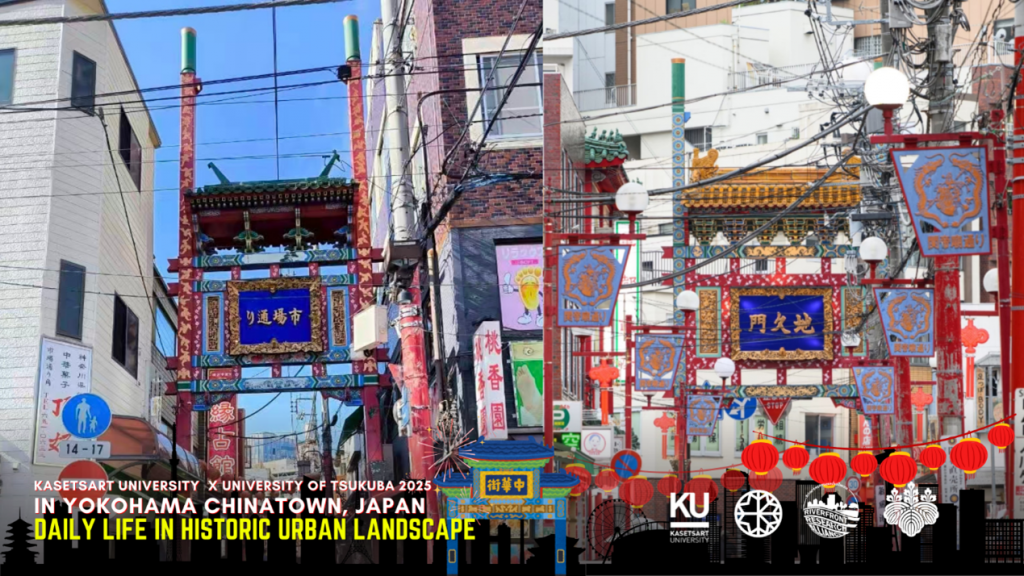
At the level of material symbolism, Chinatown constructs distinct cultural boundaries through meticulous visual coding. A framework of spatial narrative is formed by ten monumental archways (牌楼), named in accordance with cardinal directions and the principles of feng shui (such as the Vermilion Bird Gate and the Black Tortoise Gate).
These archways do more than merely mark an entrance; they act as powerful symbolic thresholds. By drawing upon the ancient Chinese cosmological system of the Four Symbols (Si Xiang)—the Azure Dragon, White Tiger, Vermilion Bird, and Black Tortoise, each governing a cardinal direction—they transpose a traditional Chinese worldview onto the foreign urban landscape. This naming strategy creates a culturally-specific spatial sequence, transforming the entire district from a mere neighborhood into a meaningful text inscribed with collective memory.
Consequently, the act of passing under a pailou becomes a ritual of transition—a symbolic journey from the modern Western city into a cultural enclave rooted in Eastern tradition. The intricate decorations, colorful paintings, and calligraphic inscriptions adorning their beams further constitute a comprehensive system of visual discourse. Together, these elements continuously reinforce the perception of a cultural boundary, making the archways the cornerstone of Chinatown’s identity as a self-defined symbolic realm.
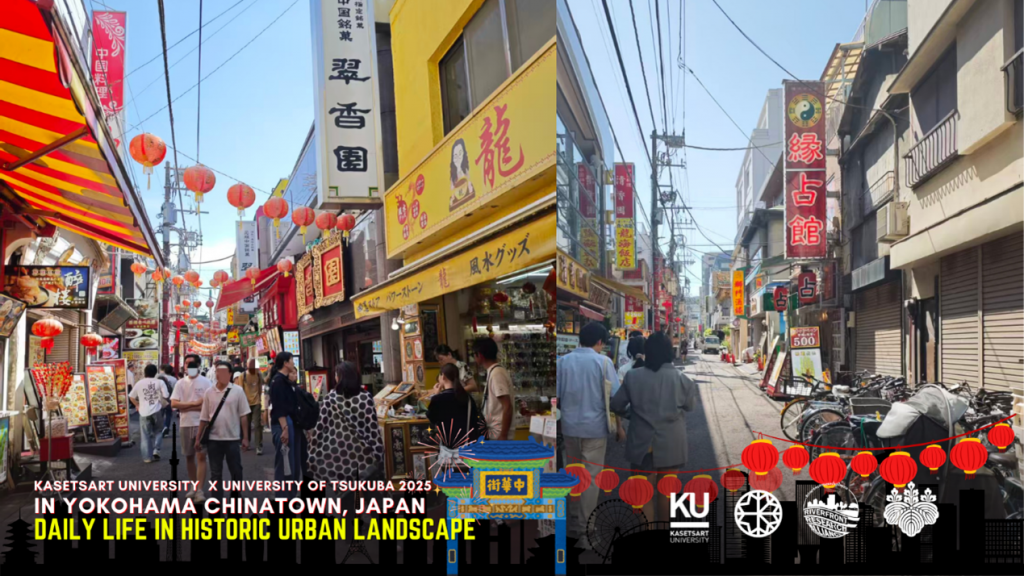
Advertising hoardings and building facades throughout the district are predominantly adorned in red and gold (Figure 3), establishing a strong and coherent Chinese visual identity. In Chinese culture, red traditionally symbolizes celebration, joy, and good fortune, while gold represents wealth, prosperity, and nobility. This deliberate color scheme not only evokes a sense of cultural pride but also creates a vibrant and auspicious atmosphere. Furthermore, the hybrid nature of the local culture is visually highlighted by the coexistence of traditional Chinese shop signs—often featuring calligraphic scripts and classical motifs—alongside practical explanatory texts in Japanese. This juxtaposition reflects a unique cultural fusion, where deep-rooted Chinese traditions seamlessly blend with modern, cross-cultural influences.
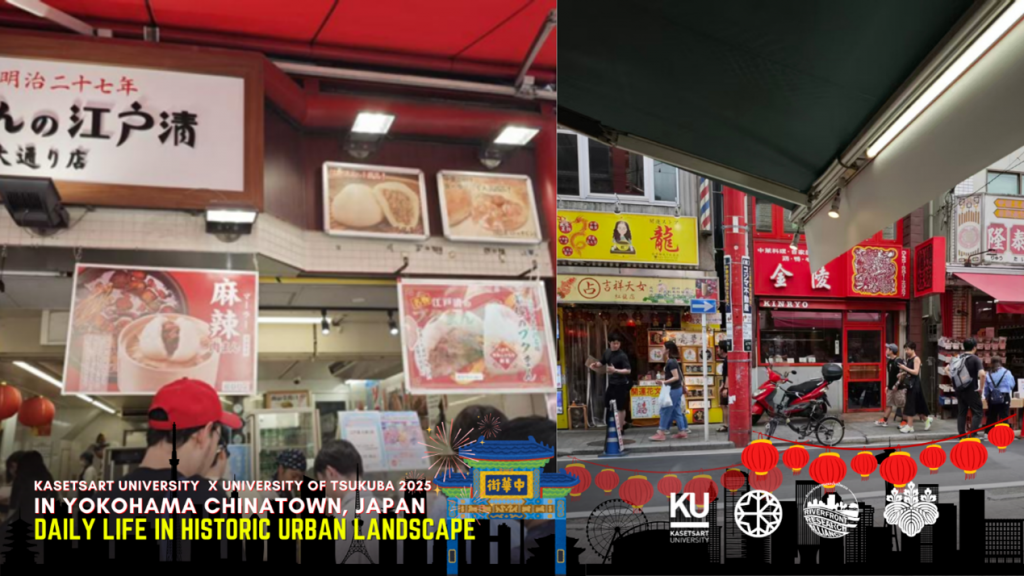
The localization transformation of consumption symbols has been particularly pronounced. Culinary culture has undergone creative adaptation: for instance, enhanced sweetness and reduced spiciness preserve Chinese elements while catering to Japanese palates; standardised “red-gold patterned” gift packaging renders foodstuffs into portable cultural symbols.
Research indicates that approximately 70% of these ‘traditional customs’ were culturally constructed during the tourism development era of the 1970s, exhibiting characteristics of ‘invented tradition.’ Interpretations of these symbols vary significantly across groups: first-generation overseas Chinese view them as carriers of cultural memory, while new-generation operators treat them as assets for commercial differentiation. Japanese consumers, however, often engage with a ‘Chinese imagination’ mediated through these symbols.
Contemporary Yokohama Chinatown is undergoing a new phase of symbolic flux. Digital dissemination (with annual Instagram hashtags exceeding one million mentions) accelerates the diffusion of symbols, while Hanfu experience centres and bubble tea shops epitomize its youth-oriented transformation.
Through highly systematized symbolic production, Yokohama Chinatown has constructed a space that simultaneously satisfies Japanese society’s imaginings of ‘Chineseness’ while embodying the cultural identity of overseas Chinese communities. This dynamic is perpetuated through daily cultural practices, from the culinary arts and traditional festivals to the very linguistics of the street, which together form a living tapestry of inherited and adapted traditions. Moreover, this symbolic economy is not merely representational but is also fundamentally driven by tourism and commerce, ensuring the enclave’s continued vitality and relevance in the urban landscape.
ส่วนหนึ่งของโครงการ โครงการประชุมเชิงปฏิบัติการ The 2025 International Cultural Landscape, Architectural Heritage and Conservation Science Workshop in Japan ร่วมกับมหาวิทยาลัยทสีคุบะ จัดขึ้นระหว่างวันที่ 1 ถึง 9 กันยายน 2568 ณ เมืองทสึคุบะและเมืองโยโกฮามา ประเทศญี่ปุ่น ได้รับการสนับสนุนจากทุนนิสิตสู่สากลประจำปีงบประมาณ 2568 และคณะสถาปัตยกรรมศาสตร์ มหาวิทยาลัยเกษตรศาสตร์