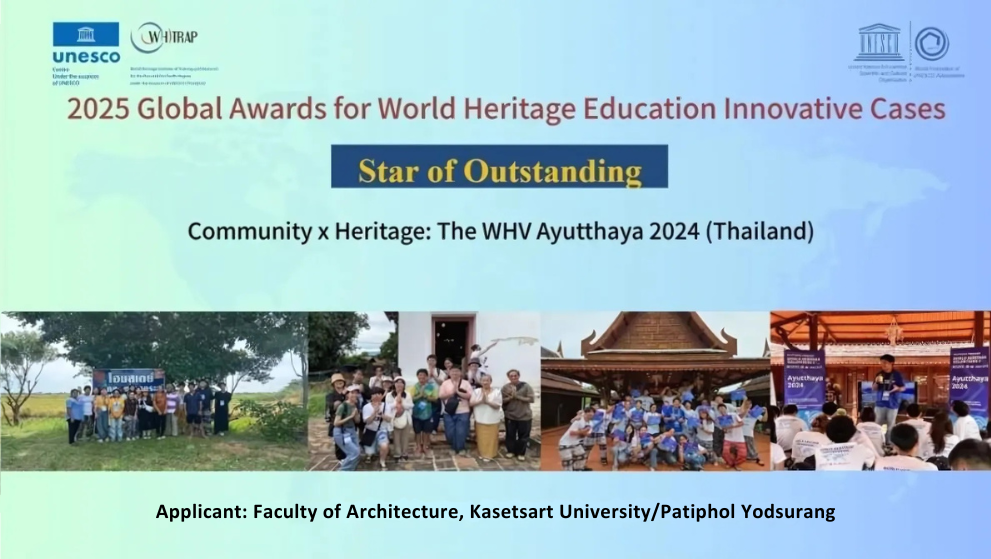

สรุปโครงการ World Heritage Volunteers 2026: River × Heritage II
21–30 สิงหาคม 2569
คณะสถาปัตยกรรมศาสตร์ มหาวิทยาลัยเกษตรศาสตร์ – กรุงเทพมหานคร – พระนครศรีอยุธยา
For English, please scroll down
โครงการ World Heritage Volunteers 2026: River × Heritage II เป็นกิจกรรมการเรียนรู้เชิงปฏิบัติการด้านมรดกวัฒนธรรมและภูมิทัศน์ริมน้ำที่พัฒนาขึ้นจากแนวคิดว่า “มรดก” ไม่ได้จำกัดอยู่เพียงโบราณสถาน อาคาร หรือวัตถุทางประวัติศาสตร์ แต่เป็นระบบความสัมพันธ์ระหว่างน้ำ เมือง ชุมชน อาหาร การเดินทาง ความทรงจำ ทักษะ และวิถีชีวิตของผู้คน โครงการจึงออกแบบให้ผู้เข้าร่วมจากหลากหลายประเทศได้เรียนรู้ผ่านการบรรยาย การเดินสำรวจ การพายเรือ การใช้ชีวิตร่วมกับชุมชน การทดลองทำอาหาร การทำงานอาสาสมัคร และการสื่อสารมรดกผ่านศิลปะและกิจกรรมสาธารณะ
ตลอดสิบวัน ผู้เข้าร่วมค่อย ๆ เคลื่อนจากการทำความเข้าใจแนวคิดในห้องเรียน ไปสู่การอ่านเมืองจากพื้นที่จริง จากกรุงเทพฯ สู่พระนครศรีอยุธยา จากโบราณสถานสู่ชุมชน จากการมองแม่น้ำจากบนฝั่งไปสู่การลงไปเคลื่อนที่อยู่ในสายน้ำด้วยตนเอง และท้ายที่สุดนำประสบการณ์เหล่านั้นกลับมาตีความและสื่อสารต่อสาธารณะผ่านกิจกรรม AUG/ART ณ วัดกุฎีดาว
Day 1 | Understanding Ayutthaya: Water, Heritage and Resilience

วันแรกเริ่มต้นอย่างเป็นทางการ ณ คณะสถาปัตยกรรมศาสตร์ มหาวิทยาลัยเกษตรศาสตร์ โดยวางพื้นฐานความเข้าใจเกี่ยวกับคุณค่าของเมืองมรดกโลกอยุธยา และความสัมพันธ์ระหว่างระบบน้ำ มรดกวัฒนธรรม การเปลี่ยนแปลงสภาพภูมิอากาศ ความเสี่ยงจากภัยพิบัติ การท่องเที่ยว และการมีส่วนร่วมของชุมชน
ผู้เข้าร่วมได้รับฟังมุมมองจากผู้เชี่ยวชาญหลายสาขา ได้แก่ Dr. Hatthaya Siriphatthanakun จาก SEAMEO SPAFA ในหัวข้อ “Ayutthaya’s Hydrology and Heritage: Managing Water Systems in Historic Cities” ซึ่งช่วยวางภาพของอยุธยาในฐานะเมืองที่พัฒนาขึ้นจากความเข้าใจระบบน้ำอย่างลึกซึ้ง ต่อด้วย Dr. Rohit Jigyasu ในประเด็นการเปลี่ยนแปลงสภาพภูมิอากาศ ภัยพิบัติ และความยืดหยุ่นของมรดก Watcharee Churugsa จาก DASTA ในเรื่องการท่องเที่ยวและภูมิทัศน์วัฒนธรรมริมน้ำ และ Assistant Professor Aracha Krasea-in ในเรื่องกระบวนการสร้างสรรค์และการมีส่วนร่วม
วันแรกจึงทำหน้าที่เป็นกรอบความคิดของทั้งโครงการ โดยชวนให้ผู้เข้าร่วมมองอยุธยาไม่ใช่เพียงในฐานะ “เมืองโบราณ” แต่เป็น living cultural landscape ที่ระบบน้ำ ผู้คน เศรษฐกิจ วัฒนธรรม และสิ่งแวดล้อมยังเชื่อมโยงและเปลี่ยนแปลงอยู่ตลอดเวลา
Day 2 | From Bangkok Cosmology to Ayutthaya

วันที่สองเป็นการอ่านกรุงเทพฯ ผ่านแนวคิดจักรวาลวิทยาและการวางผังเมืองรัตนโกสินทร์ โดยเริ่มจากพื้นที่เสาชิงช้า–วัดสุทัศน์ ซึ่งทำหน้าที่เป็นศูนย์กลางสำคัญทางพิธีกรรม ก่อนเชื่อมต่อกับโครงข่ายคลองและคูเมือง ได้แก่ คลองคูเมืองเดิม คลองหลอดวัดราชบพิธ คลองหลอดในแนววัดราชนัดดา–วัดเทพธิดา และคลองรอบกรุง
พื้นที่เหล่านี้ช่วยให้ผู้เข้าร่วมเห็นว่าโครงสร้างเมืองไม่ได้ถูกสร้างขึ้นจากถนนและอาคารเพียงอย่างเดียว แต่เกิดจากความสัมพันธ์ระหว่างศูนย์กลางทางศาสนา ระบบน้ำ การป้องกันเมือง การสัญจร และแนวคิดเชิงจักรวาล
ความสำคัญของการเรียนรู้กรุงเทพฯ ในวันนี้อยู่ที่การเชื่อมกลับไปสู่อยุธยา เพราะกรุงเทพฯ ไม่ได้เกิดขึ้นโดยแยกขาดจากเมืองหลวงเดิม แต่รับและปรับองค์ความรู้เรื่องการตั้งเมือง คูคลอง พื้นที่ศักดิ์สิทธิ์ และระบบภูมิทัศน์น้ำจากอยุธยามาใช้ในบริบทใหม่
ช่วงต่อมา ผู้เข้าร่วมเดินทางไปยังพิพิธภัณฑสถานแห่งชาติ พระนคร เพื่อศึกษาศิลปกรรม โบราณวัตถุ และหลักฐานที่ช่วยอธิบายความต่อเนื่องและการเปลี่ยนผ่านระหว่างอยุธยาและรัตนโกสินทร์ ทำให้ผู้เข้าร่วมเริ่มมองเห็นความสัมพันธ์ระหว่างวัตถุ สถาปัตยกรรม เมือง ความเชื่อ และสายน้ำในฐานะส่วนต่าง ๆ ของระบบมรดกเดียวกัน
Day 3 | Conservation, Historic Waterways and Urban Communities

วันที่สามเริ่มต้นที่วัดพระเชตุพนวิมลมังคลาราม หรือวัดโพธิ์ โดยได้รับการต้อนรับจากนักอนุรักษ์ของ World Monuments Fund–Thailand ภายใต้โครงการอนุรักษ์หอไตร ตำหนักวาสุกรี
ผู้เข้าร่วมได้เห็นงานอนุรักษ์ที่กำลังดำเนินอยู่จริง และเรียนรู้แนวคิดเรื่องการรักษาวัสดุดั้งเดิม การเสริมความมั่นคงเท่าที่จำเป็น และหลัก minimal intervention ซึ่งช่วยให้เข้าใจว่าการอนุรักษ์ไม่ได้หมายถึงการทำให้อาคารกลับมา “เหมือนใหม่” แต่คือการรักษาความแท้ หลักฐานทางวัตถุ และคุณค่าทางประวัติศาสตร์ของอาคารไว้ให้มากที่สุด
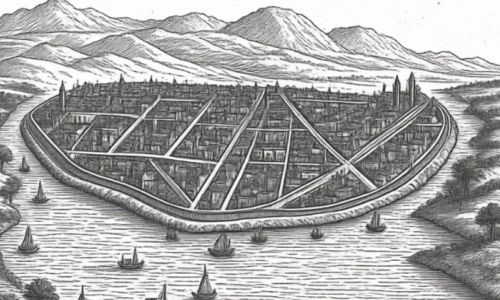
จากระดับอาคาร การเรียนรู้ขยายไปสู่ระดับเมืองผ่านการบรรยาย “Reconstructing the Ayutthaya Kingdom Waterway Network” โดย Poomipat Norapoompipat ซึ่งใช้ภาพเขียน แผนที่ เอกสารทางประวัติศาสตร์ และแผนที่สำรวจทางโบราณคดีในการสร้างภาพโครงข่ายทางน้ำของเกาะเมืองอยุธยาในอดีตขึ้นใหม่
การบรรยายนี้มีความสำคัญต่อแกนหลักของ River × Heritage II เพราะทำให้ผู้เข้าร่วมเห็นว่าอยุธยาเป็น “เมืองน้ำ” อย่างแท้จริง ระบบคลองไม่ได้มีหน้าที่เพียงระบายน้ำหรือการสัญจร แต่สัมพันธ์กับการตั้งถิ่นฐาน การค้า การเกษตร การรับมือน้ำหลาก และชีวิตประจำวัน
ช่วงบ่ายเดินทางต่อไปยังพิพิธบางลำพูและสำรวจชุมชนบางลำพู เพื่อศึกษาความสัมพันธ์ระหว่างประวัติศาสตร์เมือง คลอง ชุมชน และชีวิตร่วมสมัย เป็นอีกตัวอย่างหนึ่งที่ทำให้เห็นว่ามรดกไม่ได้อยู่เฉพาะในพิพิธภัณฑ์หรือโบราณสถาน แต่ยังอยู่ในโครงสร้างเมือง ความทรงจำ และวิถีชีวิตของผู้คน
Day 4 | Journey into the Riverine Landscape

วันที่สี่เป็นจุดเปลี่ยนจากการเรียนรู้ในกรุงเทพฯ เข้าสู่ประสบการณ์จริงในพระนครศรีอยุธยา ผู้เข้าร่วมเดินทางโดยการเปลี่ยนรูปแบบการสัญจรหลายต่อ ตั้งแต่รถไฟ เรือข้ามฟาก และรถสองแถว ก่อนเดินทางต่อไปยังพื้นที่อำเภอเสนา
การเปลี่ยนโหมดการเดินทางไม่ได้เป็นเพียงเรื่องของการเดินทางจากจุดหนึ่งไปยังอีกจุดหนึ่ง แต่ทำให้ผู้เข้าร่วมเริ่มสัมผัสภูมิทัศน์และวิถีการเดินทางในพื้นที่ริมน้ำด้วยร่างกายของตนเอง
กิจกรรมสำคัญคือการฝึกพาย “เรือเข็ม” ซึ่งเป็นเรือไม้พื้นถิ่นขนาดเล็ก การเรียนรู้การทรงตัว การบังคับทิศทาง และการเคลื่อนที่ไปกับน้ำถือเป็น foundation สำคัญของกิจกรรม River Heritage ในวันต่อ ๆ ไป เพราะการเข้าใจภูมิทัศน์ริมน้ำไม่สามารถเกิดจากการมองจากบนฝั่งเพียงอย่างเดียว
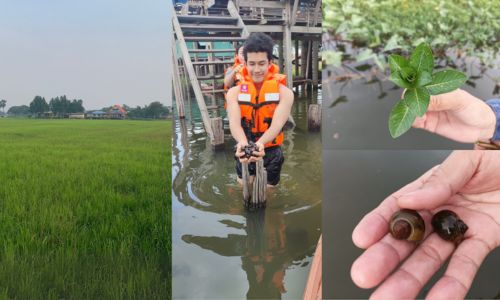
ผู้เข้าร่วมยังได้ออกไปเก็บ “ผักแพงพวย” จากพื้นที่ริมน้ำ เพื่อนำกลับมาทำยำแพงพวย ซึ่งเป็นอาหารท้องถิ่นที่แทบหากินไม่ได้ในตลาดทั่วไป พร้อมกับรับประทานอาหารอย่างต้มปลาชะโด
กิจกรรมธรรมดาอย่างการพายเรือ เก็บผัก เตรียมอาหาร และนั่งกินข้าวร่วมกัน กลายเป็นพื้นที่ของการแลกเปลี่ยนระหว่างชาวบ้านกับอาสาสมัคร รวมถึงระหว่างผู้เข้าร่วมจากประเทศต่าง ๆ ด้วยกันเอง การเรียนรู้จึงไม่ได้เกิดจากการบรรยาย แต่เกิดขึ้นผ่านบทสนทนาระหว่างการใช้ชีวิตร่วมกัน
Day 5 | Cultural Exchange, Gastronomy and Water Skills
Day 5 | Cultural Exchange, Gastronomy and Water Skills

วันที่ห้าเริ่มจากการแลกเปลี่ยนวัฒนธรรมผ่านทักษะการใช้ชีวิตกับน้ำ คนรุ่นใหม่จากต่างประเทศได้ทดลองพายเรือไม้และเรียนรู้การขับเรือหางยาวจากชาวบ้าน ขณะที่ชาวบ้านได้ทดลองใช้ SUP board เป็นการสลับบทบาทผู้สอนและผู้เรียนที่เกิดขึ้นอย่างเป็นธรรมชาติ
จาก River Heritage การเรียนรู้ขยายไปสู่ Gastronomy Heritage ผ่านเวิร์กช็อปอาหาร ผู้เข้าร่วมได้ลงมือทำทองม้วน ผัดไทย และโรตีสายไหม ซึ่งช่วยให้เห็นว่าอาหารไม่ใช่เพียงผลิตภัณฑ์ปลายทาง แต่ประกอบด้วยความรู้ วัตถุดิบ ทักษะ การจดจำ และการส่งต่อระหว่างคนรุ่นต่าง ๆ
ช่วงท้ายของวันทุกคนกลับลงน้ำอีกครั้งเพื่อฝึก SUP board จากพื้นฐานการทรงตัวที่ได้เรียนรู้ผ่านเรือไม้ในวันก่อน ผู้เข้าร่วมส่วนใหญ่สามารถปรับตัวได้อย่างรวดเร็ว หลายคนยืนบนบอร์ดได้ตั้งแต่ช่วงแรก และเริ่มเคลื่อนที่ไปบนผิวน้ำได้อย่างมั่นใจ
กิจกรรมวันนี้จึงช่วยสร้างทั้งความมั่นใจและทักษะที่จำเป็นสำหรับการสำรวจทางน้ำในวันต่อไป พร้อมทำให้เห็นว่า River Heritage ประกอบขึ้นจากทั้งเรือ อาหาร ทักษะ ความรู้ และความสัมพันธ์ระหว่างคน
Day 6 | Reading Ayutthaya from the Water

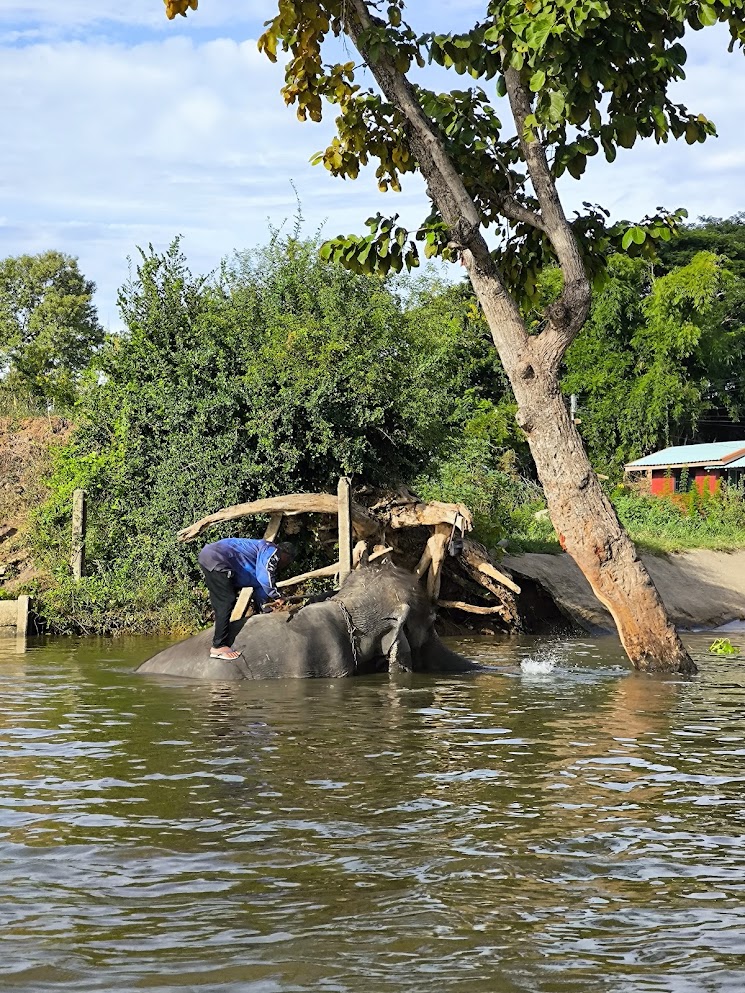
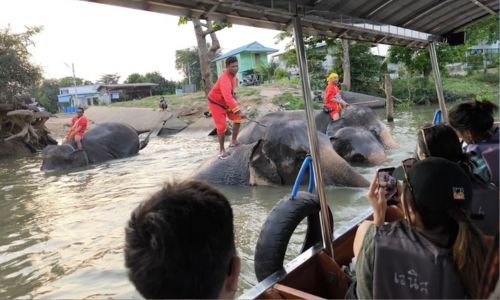
วันที่หกเริ่มตั้งแต่เช้าด้วยการพายเรือที่นำโดย PA PI PIE ตามแนวแม่น้ำลพบุรี ผู้เข้าร่วมได้สำรวจแนวตลิ่ง พื้นที่เลี้ยงช้าง และภูมิทัศน์ริมแม่น้ำ ก่อนเดินทางต่อไปยังหัวรอและบริเวณวัดมณฑป
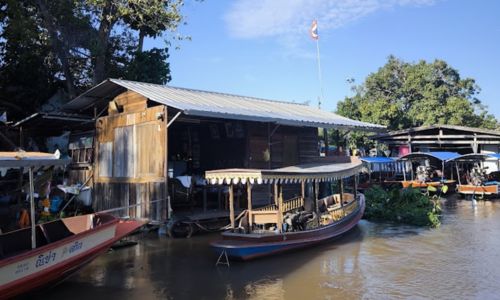
หนึ่งในประสบการณ์ที่สำคัญคือการได้พบระบบเรือข้ามฟากขนาดเล็กที่ยังใช้เรือพายและแรงคนในการพาผู้โดยสารข้ามแม่น้ำ การเดินทางแบบนี้อาจดูเรียบง่าย แต่สะท้อนให้เห็นว่า River Heritage ยังคงอยู่ในชีวิตประจำวัน ผ่านทักษะของคน เรือ ท่าน้ำ และเส้นทางที่ยังมีการใช้งานจริง
การมองเมืองจากระดับผิวน้ำยังทำให้ผู้เข้าร่วมเห็นอาคาร บ้านเรือน ตลิ่ง พืชน้ำ วัด และชุมชนในมุมที่แตกต่างจากการเดินหรือขับรถบนถนน
ช่วงบ่ายเปลี่ยนมาเป็นการสำรวจภูมิทัศน์บริเวณคลองสระบัว โดยไปยังวัดพระยาแมน วัดจงกลม และวัดเชิงท่า เพื่อศึกษาความสัมพันธ์ระหว่างวัด คลอง ชุมชน และโครงข่ายน้ำรอบเกาะเมืองอยุธยา ก่อนปิดท้ายวันที่วัดกุฎีดาว เพื่อเริ่มสำรวจและเตรียมพื้นที่สำหรับกิจกรรมสาธารณะและนิทรรศการในช่วงสุดสัปดาห์
Day 7 | Paddle for Heritage

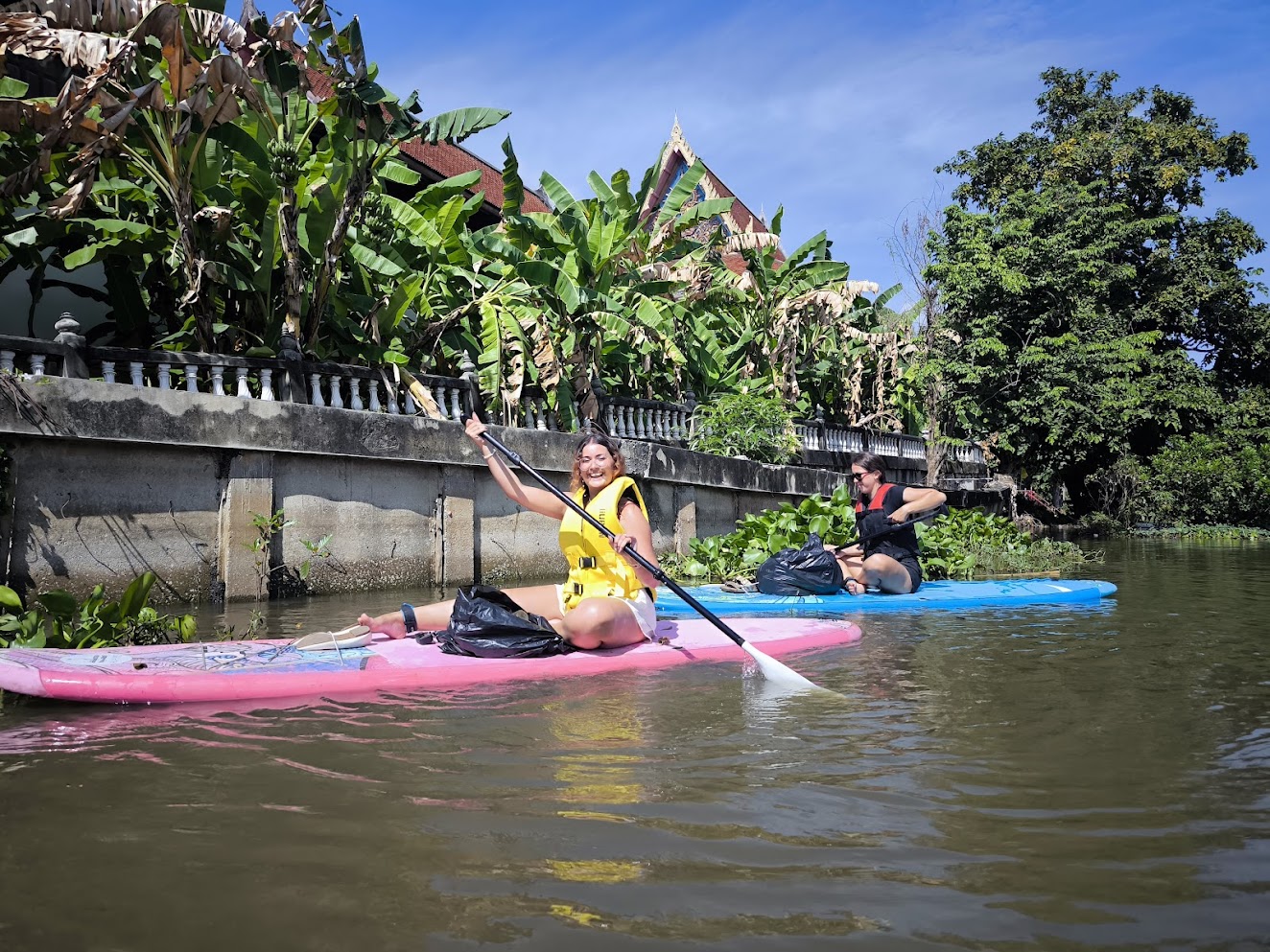
วันที่เจ็ดเป็นหนึ่งในกิจกรรมหลักของโครงการ คือ “Paddle for Heritage” การพายเรือเก็บขยะและเปิดทางน้ำ เริ่มจากวัดกระสัง ผ่านคลองกระมัง ก่อนออกสู่แม่น้ำป่าสัก พร้อมสัมผัสภูมิทัศน์ของอโยธยาศรีรามเทพนครจากบนผิวน้ำ
ผู้เข้าร่วมจากหลายประเทศทำงานร่วมกับชาวบ้าน ตัวแทนองค์การบริหารส่วนจังหวัด และเครือข่ายในพื้นที่ ทั้ง PA PI PIE พี่อู๋จาก Korat Kayak Club พี่พัทจากบางบาล และพี่ป๊อกจากนครเนื่องเขต ในการเก็บขยะ ลอกผักตบชวา และช่วยกันเปิดทางน้ำ
กิจกรรมนี้ไม่ได้มีเป้าหมายเพียงการทำความสะอาด แต่ต้องการให้ผู้เข้าร่วมได้เห็นระบบน้ำจริง ได้เข้าใจว่าผักตบชวาเคลื่อนตัวอย่างไร ขยะสะสมตรงไหน ระดับน้ำมีผลอย่างไร และคลองเปลี่ยนแปลงไปอย่างไรเมื่อเข้าสู่ฤดูน้ำหลาก
พื้นที่ดังกล่าวได้รับการเปิดทางมาแล้วถึงสามครั้ง แต่เมื่อระดับน้ำสูงขึ้น ผักตบชวาก็สามารถไหลกลับเข้ามาปิดทางได้อีกครั้ง สิ่งนี้แสดงให้เห็นอย่างชัดเจนว่า River Heritage เป็นระบบที่มีพลวัต และการดูแลไม่สามารถจบลงด้วย intervention เพียงครั้งเดียว แต่ต้องอาศัยการติดตามและความร่วมมืออย่างต่อเนื่อง
อีกหนึ่งความอบอุ่นของวันคือการต้อนรับจากเจ้าอาวาสวัดกระสัง พร้อมน้ำลำไยเย็น ๆ ที่ช่วยเติมพลังหลังจากการทำงานหนักในช่วงเช้า
กิจกรรมวันนี้จึงเป็นทั้งการผจญภัย การทำงานอาสาสมัคร และการเรียนรู้ระบบนิเวศและวัฒนธรรมของสายน้ำผ่านประสบการณ์ตรง
Day 8 | Reading the City by Bicycle and Preparing AUG/ART

วันที่แปดเปลี่ยนจากการพายเรือมาเป็นการสำรวจเมืองด้วยจักรยาน เริ่มจากกลางเกาะเมืองอยุธยา ผ่านกลุ่มวัดมหาธาตุและวัดราชบูรณะ แวะวัดหน้าพระเมรุ ก่อนเดินทางต่อไปยังวัดไชยวัฒนารามและวัดพุทไธศวรรย์ และข้ามแม่น้ำด้วยเรือที่ท่าวัดขุนพรหม
การเคลื่อนที่ด้วยจักรยานทำให้ผู้เข้าร่วมเห็นระยะทาง การเชื่อมต่อ และความสัมพันธ์ระหว่างโบราณสถานบนเกาะเมือง วัดริมแม่น้ำ พื้นที่นอกเกาะ และชุมชนร่วมสมัย
เส้นทางดังกล่าวยังทำให้เห็นว่าการอ่านอยุธยาไม่สามารถแยก “เมืองบนบก” ออกจาก “เมืองน้ำ” เพราะการเดินทางบนถนนยังคงเชื่อมกลับเข้าสู่ระบบเรือข้ามฟาก แม่น้ำ และท่าน้ำอย่างต่อเนื่อง
ช่วงบ่ายทุกคนกลับมายังวัดกุฎีดาวเพื่อเตรียมงาน AUG/ART ทั้งการจัดพื้นที่ เตรียมนิทรรศการ และพัฒนาชิ้นงานจากวัสดุที่นำกลับมาใช้ใหม่ เช่น ฝาขวดพลาสติก ตาข่าย และวัสดุเหลือใช้
หลังจากหลายวันที่สะสมประสบการณ์ ผู้เข้าร่วมเริ่มเปลี่ยนจากบทบาทของ “ผู้เรียน” ไปสู่ “ผู้สื่อสาร” โดยนำสิ่งที่ได้เห็น ได้สัมผัส และได้คิด มาตีความเป็นงานศิลปะและกิจกรรมที่ประชาชนสามารถเข้ามามีส่วนร่วมได้
Day 9 | AUG/ART: Heritage Meets the Public

วันที่เก้าเป็นวันแรกที่พื้นที่วัดกุฎีดาวเปิดเต็มรูปแบบสู่สาธารณะผ่าน AUG/ART 2: “นอกเกาะนอกกรอบ”
หลังจากตลอดสัปดาห์ที่ผู้เข้าร่วมได้เรียนรู้จากแม่น้ำ คลอง อาหาร ชุมชน การเดินทาง และโบราณสถาน วันนี้ประสบการณ์เหล่านั้นถูกนำมาแบ่งปันผ่านงานศิลปะ นิทรรศการ กิจกรรมสร้างสรรค์ การพูดคุย และการมีส่วนร่วมของผู้มาเยือน
วัดกุฎีดาวซึ่งเป็นโบราณสถานสำคัญนอกเกาะเมืองกลายเป็นพื้นที่พบปะของศิลปิน นักศึกษา อาสาสมัครนานาชาติ เด็ก ครอบครัว ชาวอยุธยา ผู้ประกอบการ และนักท่องเที่ยว
กิจกรรมยังได้รับการสนับสนุนจากภาคเอกชนหลายฝ่าย ทั้งน้ำดื่มจาก ThaiNamthip ซึ่งช่วยดูแลผู้เข้าร่วมตลอดโครงการ รวมถึงเครื่องพิมพ์ Canon ที่กลายเป็นอุปกรณ์หลักในการผลิตสติกเกอร์และสื่อสร้างสรรค์สำหรับแจกแก่เด็กและผู้ร่วมงาน ขณะที่วัสดุเหลือใช้บางส่วน เช่น ขวดและฝาพลาสติก ก็ถูกนำกลับมาใช้สร้างงานศิลปะ เป็นการเชื่อมโยงกิจกรรมสร้างสรรค์กับแนวคิดเรื่องทรัพยากรและของเสีย
บรรยากาศตลอดสองวันของ AUG/ART มีผู้คนหมุนเวียนเข้ามาอย่างต่อเนื่อง โดยคาดว่ามีผู้เข้าร่วมประมาณ 10,000 คน หรือเฉลี่ยประมาณ 5,000 คนต่อวัน ทำให้พื้นที่โบราณสถานนอกเกาะเมืองกลับมามีชีวิตและได้รับความสนใจจากสาธารณะในรูปแบบใหม่
Day 10 | Giving Back and Closing the Journey

วันสุดท้ายของ World Heritage Volunteers 2026: River × Heritage II เป็นทั้งวันปิดโครงการและวันสุดท้ายของ AUG/ART
นักศึกษาและอาสาสมัครยังคงทำงานอย่างเต็มที่ ทั้งดูแลกิจกรรม นำเสนอผลงาน พูดคุยกับผู้มาเยือน แจกสติกเกอร์และสื่อกิจกรรม รวมถึงช่วยกันจำหน่ายผลงานและของที่เกิดขึ้นจากกระบวนการเรียนรู้
รายได้จากกิจกรรมรวมทั้งสิ้น 7,320 บาท ถูกนำไปถวายวัดประดู่ เป็นการส่งต่อผลลัพธ์จากแรงกาย แรงใจ และการทำงานร่วมกันกลับคืนสู่พื้นที่และชุมชน
การปิดโครงการจึงไม่ได้จบเพียงการมอบประกาศนียบัตรหรือการกล่าวอำลา แต่เป็นการสะท้อนกลับไปยังสิ่งที่ผู้เข้าร่วมได้เรียนรู้ตลอดสิบวัน ตั้งแต่การมองเมืองผ่านระบบน้ำ การใช้ชีวิตกับชุมชน การเรียนรู้ทักษะพื้นถิ่น การทำงานอนุรักษ์ การสำรวจโบราณสถาน การเก็บขยะและผักตบชวา ไปจนถึงการแปลงประสบการณ์เหล่านั้นเป็นศิลปะและการสื่อสารกับสาธารณะ
ตลอดโครงการได้รับความร่วมมือจากหลายภาคส่วน ทั้งกรมศิลปากร SEAMEO SPAFA, World Monuments Fund–Thailand, DASTA, องค์การบริหารส่วนจังหวัดพระนครศรีอยุธยา, PA PI PIE, Korat Kayak Club, เครือข่ายบางบาลและนครเนื่องเขต ชุมชนในพื้นที่ ศิลปิน วิทยากร นักศึกษา ตลอดจนผู้สนับสนุนจากภาคเอกชน เช่น ThaiNamthip, moreloop, Canon และ Cricut
สิ่งสำคัญที่สุดของ River × Heritage II อาจไม่ใช่เพียงจำนวนกิจกรรมหรือสถานที่ที่เดินทางไป แต่คือกระบวนการที่ทำให้ผู้เข้าร่วมค่อย ๆ เปลี่ยนวิธีมอง “มรดก”
จากเดิมที่มรดกอาจถูกมองว่าเป็นสิ่งเก่า เป็นโบราณสถาน หรือเป็นสิ่งที่ต้องรักษาไว้ กลายเป็นความเข้าใจว่ามรดกคือระบบที่ยังมีชีวิต เป็นความสัมพันธ์ระหว่างคนกับพื้นที่ ระหว่างเมืองกับน้ำ ระหว่างอาหารกับภูมิทัศน์ ระหว่างความรู้เก่ากับความท้าทายใหม่ และระหว่างคนต่างวัฒนธรรมที่สามารถเรียนรู้ซึ่งกันและกันได้
ตลอดสิบวัน กระบวนการเรียนรู้ค่อย ๆ เคลื่อนจาก lecture → observation → movement → participation → dialogue → interpretation → public engagement
จากการนั่งฟังเรื่องอยุธยาในห้องเรียน เราออกไปเดินอ่านกรุงเทพฯ ผ่านคลองและจักรวาลวิทยา จากนั้นเรียนรู้การอนุรักษ์อาคารจริง ศึกษาแผนที่และระบบคลอง ก่อนขึ้นรถไฟเข้าสู่อยุธยา ลงเรือไม้ เก็บผัก ทำอาหาร พาย SUP สำรวจแม่น้ำ พายเก็บขยะ ลอกผักตบ ขี่จักรยานผ่านโบราณสถาน และท้ายที่สุดนำประสบการณ์ทั้งหมดกลับมาสร้างบทสนทนากับสาธารณะผ่าน AUG/ART
River × Heritage II จึงไม่ได้ต้องการเพียง “สอนเรื่องมรดก” แต่ต้องการให้ผู้เข้าร่วมได้อยู่กับมรดก เคลื่อนที่ผ่านมรดก ใช้มรดกเป็นพื้นที่ของการพบปะ และเข้าใจว่าการดูแลมรดกในอนาคตจำเป็นต้องมีทั้งความรู้ การลงมือทำ ความร่วมมือ และความสัมพันธ์ระหว่างผู้คน
เมื่อโครงการสิ้นสุดลง สิ่งที่เหลืออยู่จึงไม่ใช่เพียงภาพถ่ายหรือประกาศนียบัตร แต่คือประสบการณ์ร่วม เครือข่ายใหม่ ความทรงจำ และคำถามที่ผู้เข้าร่วมจะนำกลับไปคิดต่อในประเทศและบริบทของตนเอง
สิบวันของ River × Heritage II อาจจบลงแล้ว แต่ความสัมพันธ์ระหว่าง Water → Heritage → People → Community → Future
World Heritage Volunteers 2026: River × Heritage II
21–30 August 2026
Faculty of Architecture, Kasetsart University – Bangkok – Phra Nakhon Si Ayutthaya
World Heritage Volunteers 2026: River × Heritage II was designed as an experiential learning programme on cultural heritage and riverine cultural landscapes. The programme was based on the idea that heritage is not limited to monuments, historic buildings, or artefacts, but is formed through relationships between water, cities, communities, food, mobility, memory, skills, and everyday life. Participants from different countries therefore learned through lectures, urban walks, paddling, community living, food workshops, volunteer work, field observation, and public engagement through art and exhibition activities.
Across ten days, participants gradually moved from conceptual learning in the classroom to direct engagement with real places. The programme began in Bangkok, where participants explored the historical relationship between cosmology, urban form, canals, and the development of the early Rattanakosin capital, before moving towards Ayutthaya. The journey was designed to help participants understand the continuity between Bangkok and Ayutthaya, particularly in relation to water-based urban planning, sacred landscapes, and systems of mobility.
Day 1 | Understanding Ayutthaya: Water, Heritage and Resilience

Day 1 introduced Ayutthaya as a World Heritage city shaped by water, cultural heritage, climate change, disaster risk, tourism, and community participation. At the Faculty of Architecture, Kasetsart University, participants were introduced to key themes that would guide the entire programme. Dr. Hatthaya Siriphatthanakun of SEAMEO SPAFA presented “Ayutthaya’s Hydrology and Heritage: Managing Water Systems in Historic Cities,” while Dr. Rohit Jigyasu discussed climate change, disaster risk, and heritage resilience. Watcharee Churugsa of DASTA explored tourism in riverine cultural landscapes, and Assistant Professor Aracha Krasea-in introduced creative and participatory approaches to heritage work. The first day established an important conceptual framework: Ayutthaya should not be understood simply as an ancient capital or a collection of monuments, but as a living cultural landscape in which water, people, ecology, economy, and heritage remain interconnected.
Day 2 | From Bangkok Cosmology to Ayutthaya

Day 2 focused on reading Bangkok through cosmology and the spatial structure of early Rattanakosin. Participants explored the Giant Swing–Wat Suthat area as a ceremonial centre and studied the relationship between this centre and the surrounding water network, including the Old City Moat, Khlong Lot Wat Ratchabophit, Khlong Lot Wat Ratchanadda, and Khlong Rop Krung. These waterways were considered not only as infrastructure for mobility and defence, but also as spatial elements that defined the symbolic and physical boundaries of the capital.
This exploration was directly connected to Ayutthaya. Bangkok did not emerge in isolation from the former capital, but inherited and adapted knowledge of city planning, sacred geography, canals, moats, and water-based urban systems from Ayutthaya. The day continued at the Bangkok National Museum, where participants examined artworks, artefacts, and historical evidence that helped explain the transition from Ayutthaya to Rattanakosin. This encouraged participants to understand heritage across different scales, from objects and architecture to cities, beliefs, and water systems.
Day 3 | Conservation, Historic Waterways and Urban Communities

Day 3 moved from urban history to conservation practice. At Wat Phra Chetuphon Wimon Mangkhalaram, or Wat Pho, conservators from World Monuments Fund–Thailand welcomed the participants to the ongoing conservation project at Ho Trai, Tamnak Wasukri. Participants observed conservation work in progress and learned about architectural and artistic values, the retention of original materials, structural strengthening, and the principle of minimal intervention. This helped demonstrate that conservation is not about making a historic building look new, but about preserving authenticity, material evidence, and historic value.
The programme then expanded from the scale of the building to the scale of the city through the lecture “Reconstructing the Ayutthaya Kingdom Waterway Network” by Poomipat Norapoompipat. Using historical paintings, maps, documents, and archaeological survey maps, the lecture reconstructed the historic canal network of Ayutthaya and demonstrated how waterways were deeply connected to settlement, mobility, trade, flood management, agriculture, and everyday life. In the afternoon, participants visited Pipit Banglamphu and explored the Banglamphu community, examining how urban heritage continues to exist through neighbourhood structures, canals, collective memory, and contemporary life.
Day 4 | Journey into the Riverine Landscape

Day 4 marked the transition from Bangkok into Ayutthaya and into a more immersive form of learning. Participants travelled through several modes of transportation, including train, ferry, and local songthaew, before reaching Sena District, where they spent time living alongside the local community. The journey itself became part of the learning process, demonstrating how movement through the riverine landscape shapes the way places are experienced.
An important activity was learning to paddle a ruea khem, a small traditional wooden boat. Participants learned how to balance, steer, and move with the current. This became an essential foundation for the main River Heritage activities in the following days, because understanding a water landscape cannot be achieved only by observing it from land.
Participants also collected phak phaeng phuai, an edible riverside plant that is rarely found in ordinary markets, and prepared yam phaeng phuai together with local residents. The meal also included tom pla chado, or giant snakehead fish soup. These simple activities—paddling, collecting ingredients, preparing food, and eating together—created informal spaces for dialogue between local residents and international participants, as well as among participants from different cultural backgrounds.

Day 5 continued this cultural exchange through water and food. In the morning, international participants learned to paddle traditional wooden boats and operate a long-tail boat with local residents, while community members were invited to try SUP boards themselves. This exchange of roles created a shared learning environment in which local knowledge and contemporary recreational skills could meet.
The programme then moved into Gastronomy Heritage through hands-on workshops. Participants learned to make thong muan, prepared Pad Thai, and continued with roti sai mai, one of the foods closely associated with Ayutthaya. Through these activities, food was understood not only as something to eat, but as a form of living heritage shaped by ingredients, skills, memories, knowledge, and intergenerational transmission.
Later in the day, everyone returned to the water for SUP practice. Building on the balance and paddling skills introduced through traditional wooden boats, participants adapted quickly, and many were able to stand on their boards within a short time. This activity helped prepare them for more extended river exploration and demonstrated the value of learning heritage through physical experience.
Day 6 | Reading Ayutthaya from the Water

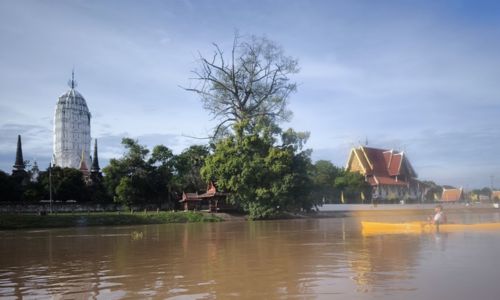
Day 6 was dedicated to reading Ayutthaya directly from the water. Led by PA PI PIE, participants paddled along the Lopburi River, observing the riverbanks, settlement patterns, areas where elephants remain part of the contemporary landscape, and the relationship between waterways and everyday life. The route continued towards Hua Ro and Wat Monthop.
One particularly memorable experience was encountering a small ferry crossing that still relies on a manually rowed boat. This simple system of mobility showed that River Heritage continues to exist through boats, landing places, human skills, and daily routes that are still in use. Experiencing these places from water level allowed participants to see Ayutthaya from a perspective very different from that of roads or monuments.
In the afternoon, participants explored the cultural landscape around Khlong Sa Bua, visiting Wat Phraya Man, Wat Chong Klom, and Wat Choeng Tha. These visits helped reveal the relationships between temples, canals, settlements, and the wider hydraulic landscape surrounding the historic city. The day ended at Wat Kudidao, where participants began preparing the site for the public exhibition and weekend activities.
Day 7 | Paddle for Heritage

Day 7 was one of the central activities of the programme: Paddle for Heritage. Participants paddled from Wat Krasang through Khlong Kramang towards the Pa Sak River, while experiencing the landscape of Ayothaya Sri Ram Thep Nakhon from the water. International participants worked together with local residents, representatives of the Provincial Administrative Organization, PA PI PIE, P’Ou from Korat Kayak Club, P’Pat from Bang Ban, and P’Pok from Nakhon Nueang Khet.
The group collected waste, cleared waterways, and removed water hyacinth that had accumulated in the canal. The activity was not simply a clean-up operation. It was designed to help participants understand how water systems behave in practice: how floating vegetation moves, where waste accumulates, how seasonal water levels affect canals, and why waterway management requires constant attention.
The same route had already been reopened several times, yet rising water levels brought water hyacinth back into the canal. This demonstrated that river systems are dynamic and cannot be maintained through a single intervention. Continuous stewardship, local knowledge, and collaboration are essential. The day also included a warm welcome from the abbot of Wat Krasang, who kindly provided refreshing longan drinks for the participants after the morning activities.
Day 8 | Reading the City by Bicycle and Preparing AUG/ART

Day 8 shifted from paddling to cycling. Participants travelled from the centre of Ayutthaya’s historic island through the Wat Mahathat and Wat Ratchaburana area, stopped at Wat Na Phra Men, continued to Wat Chaiwatthanaram and Wat Phutthaisawan, and crossed the river by ferry at Wat Khun Phrom.
Cycling allowed participants to understand distance, connectivity, and the spatial relationships between monuments on the island, riverside temples, areas beyond the island, and contemporary communities. The route also demonstrated that the “land city” and the “water city” cannot be separated. Even a journey by bicycle eventually returned to river crossings and ferry systems.
In the afternoon, participants returned to Wat Kudidao to prepare the AUG/ART exhibition. They worked on the exhibition space and created installations using reused materials such as plastic bottle caps, mesh, and discarded objects. After several days of observing, moving, eating, paddling, and engaging with communities, participants now shifted from being learners to becoming interpreters and communicators of heritage.
Day 9 | AUG/ART: Heritage Meets the Public

Day 9 opened the programme fully to the public through AUG/ART 2: “Outside the Island, Outside the Frame” at Wat Kudidao. The site became a meeting place for heritage, art, students, international volunteers, local communities, families, artists, vendors, and visitors.
Experiences from the previous days were transformed into exhibitions, artworks, activities, conversations, and public engagement. The event helped draw attention to heritage sites beyond Ayutthaya’s historic island and demonstrated how art and public programming can help people reconnect with less-visited monuments.
Private-sector support also played an important role. ThaiNamthip provided drinking water throughout the programme, helping participants, volunteers, students, and visitors during outdoor activities. The Canon printer became one of the main pieces of equipment used throughout the event, producing stickers and activity materials that were distributed to children and visitors. Some of the waste generated during the programme, including plastic bottles and caps, was also reused as material for artworks, encouraging participants to think about resources, waste, and creative reuse.
The atmosphere across the two days of AUG/ART was extremely lively. Based on the steady flow of visitors, the event was estimated to have welcomed approximately 10,000 people in total, or around 5,000 visitors per day. This transformed Wat Kudidao into a vibrant public space and demonstrated the potential of creative activities to bring people back into meaningful contact with heritage places.
Day 10 | Giving Back and Closing the Journey

Day 10 was the final day of World Heritage Volunteers 2026: River × Heritage II and the closing day of AUG/ART. Students and international volunteers continued working throughout the day, managing activities, presenting their work, interacting with visitors, distributing materials, and helping to sell items produced through the programme.
A total of THB 7,320 was raised through the activities and was donated to Wat Pradu. This act of giving back was important because it allowed the energy, effort, and collaboration of the programme to return to the local community.
The project concluded not only with certificates and farewell messages, but with reflection on the entire learning process. Participants had moved from classroom discussions to urban exploration, conservation practice, river paddling, food workshops, community living, environmental action, heritage interpretation, and public engagement.
The programme was made possible through the support and collaboration of many partners, including the Fine Arts Department, SEAMEO SPAFA, World Monuments Fund–Thailand, DASTA, the Phra Nakhon Si Ayutthaya Provincial Administrative Organization, PA PI PIE, Korat Kayak Club, local networks in Bang Ban and Nakhon Nueang Khet, community members, artists, speakers, students, and private-sector supporters including ThaiNamthip, moreloop, Canon, and Cricut.
The most important outcome of River × Heritage II was not simply the number of activities completed or the number of sites visited, but the gradual transformation in how participants understood “heritage.”
Heritage was no longer seen only as something old, monumental, or protected. Instead, it became understood as a living system of relationships between people and place, cities and water, food and landscape, traditional knowledge and contemporary challenges, and between people from different cultures who can learn from one another.
Across ten days, the learning process moved from lecture → observation → movement → participation → dialogue → interpretation → public engagement.
Participants began by listening to lectures about Ayutthaya, then walked through Bangkok to understand urban cosmology and waterways, studied conservation practice, reconstructed historic canal systems, travelled by train into Ayutthaya, paddled traditional boats, collected edible plants, cooked with communities, learned SUP skills, explored rivers and canals, collected waste, removed water hyacinth, cycled between monuments, and finally transformed these experiences into exhibitions and public activities through AUG/ART.
River × Heritage II therefore did not aim simply to “teach heritage.” It aimed to allow participants to live with heritage, move through heritage, experience heritage through their own bodies, and use heritage as a space for exchange and collective action.
When the programme ended, what remained was more than photographs and certificates. It left behind shared experiences, new networks, friendships, memories, and questions that participants could carry back into their own countries and professional contexts.
The ten days of River × Heritage II may have come to an end, but the relationships between Water → Heritage → People → Community → Future continue beyond the programme.