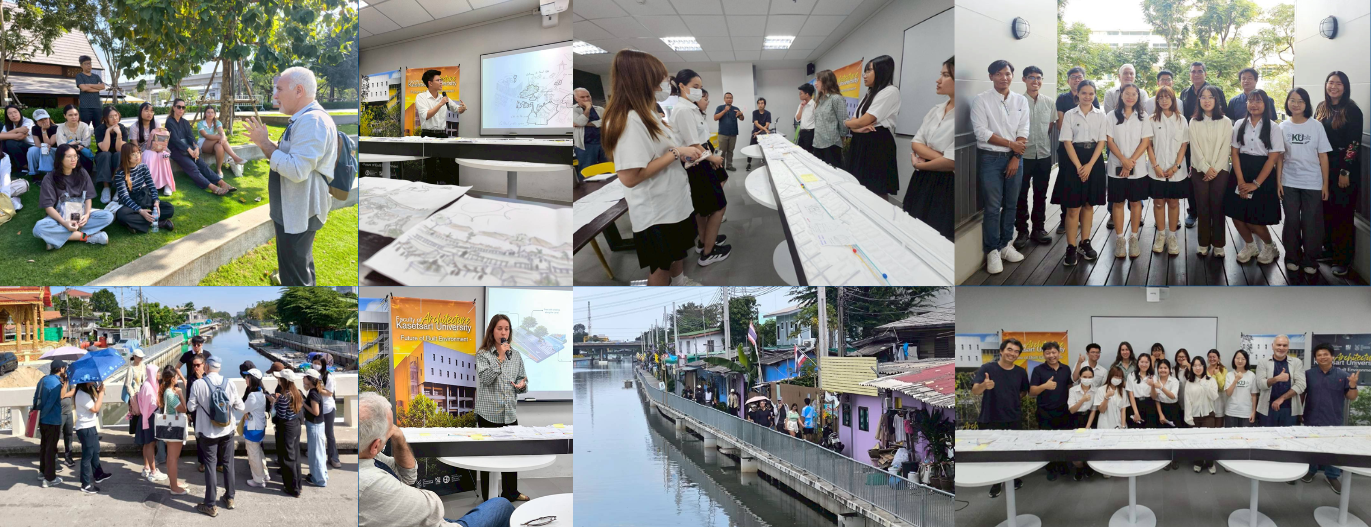
International Seminar and Workshop
Kasetsart Architecture 25 Years:Future of Built Environment
Public Seminar
23 January 2026
9.00–12.00 | Theera Sutabutra Room, 50th Anniversary Information Building at Kasetsart University
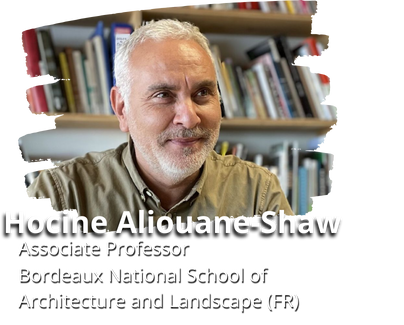
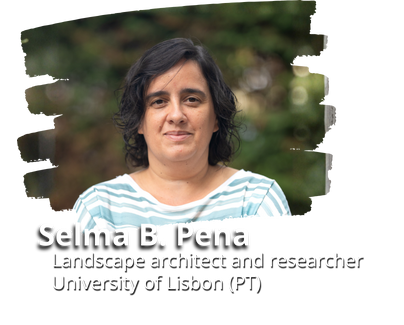
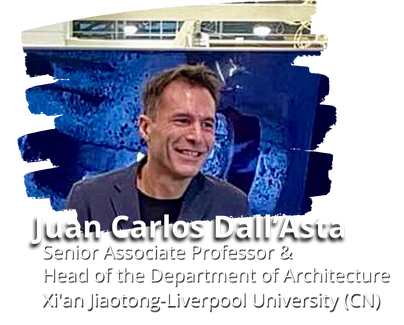
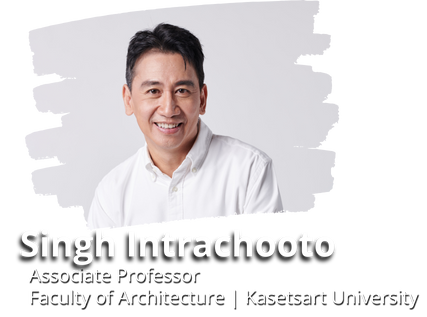
A special keynote and panel discussion featuring distinguished speakers Hocine Aliouane-Shaw, Selma B. Pena, and Juan Carlos Dall’Asta, who will share their insights on the future of the built environment. The session will be guided and moderated by Associate Professor Singh Intrachooto, bringing together diverse international perspectives in an engaging dialogue.
This executive summary documents the keynote presentations and round table discussion held as part of the seminar commemorating the 25th anniversary of the Faculty of Architecture, Kasetsart University, under the theme “Future of the Built Environment.” The seminar brought together three internationally recognized scholars: Professor Selma B. Peña from the University of Lisbon, Professor Juan Carlos Dall’Asta from Xi’an Jiaotong-Liverpool University, and Professor Hocine Aliouane-Shaw from ENSAP Bordeaux and the Freo Collective. Their contributions reflect diverse yet complementary perspectives spanning landscape ecology, urban morphology, and participatory design practice. The round table discussion was moderated by Associate Professor Dr. Singh Intrachooto, who facilitated dialogue across disciplinary and conceptual boundaries. Collectively, the seminar provided a critical reflection on contemporary challenges in architecture and urbanism, particularly in relation to ecological systems, community engagement, technological change, and future pedagogies. Rather than focusing on definitive design outcomes, the discussions emphasized long-term thinking, ethical responsibility, and process-based approaches as essential foundations for shaping the future of the built environment.
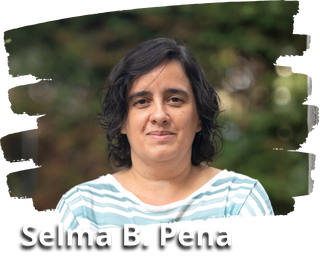
Landscape architect and researcher
University of Lisbon (Portugal)
Selma B. Pena is a landscape architect and researcher at the Instituto Superior de Agronomia (ISA), University of Lisbon, where she is affiliated with the LEAF Research Centre, linking Landscape, Environment, Agriculture and Food. She holds a PhD in Landscape Architecture (2016) and coordinates the Research Group on Resource Management & Landscape Architecture. Her work focuses on urban and rural landscape planning, ecological restoration, and GIS-supported landscape design for sustainable spatial development. Since 2011, she has taught and supervised students in landscape planning, contributing actively to research and education within the TERRA Associate Laboratory network.
The seminar commenced with a presentation by Professor Selma B. Peña from the University of Lisbon, who advocated for a paradigm shift towards ecological-based planning as the foundational requirement for future landscape resilience. Professor Peña posited that understanding the landscape system, specifically the interplay of water, soil, and vegetation, must precede any construction or zoning decisions. Drawing on the specific context of Portugal, she offered a critical analysis of historical political decisions, such as the 1929 wheat campaigns and the 1960s promotion of forest monocultures like eucalyptus, illustrating how these policies led to long-term soil degradation and heightened wildfire risks. To counter these anthropogenic errors, she introduced the concept of "Green Infrastructure" and detailed the "Scapefire" project, a research initiative designed to combat wildfires by replacing monocultures with a "fire resilient landscape network" composed of native species mosaics, agriculture, and pastures. Her theoretical framework relied heavily on using the watershed as a scalable unit for territorial planning, ensuring that interventions restore the water cycle and enhance biodiversity. Ultimately, Professor Peña argued that landscape architects bear a profound social responsibility, as their design choices impact environmental resilience for decades, necessitating a vision that places ecological integrity before human-centric utility.

Senior Associate Professor and Head of the Department of Architecture
Xi’an Jiaotong–Liverpool University (China)
Juan Carlos Dall’Asta is Senior Associate Professor and Head of the Department of Architecture at XJTLU. He earned his PhD in Architectural and Urban Design from Politecnico di Milano (2008), with specialisation in urban morphology and sustainable regeneration. His work explores urban morphology and regeneration, the philosophy of architectural design (space, temporality, materiality), and the integration of artificial intelligence into human-centred design pedagogy to foster creativity and collaboration. Juan Carlos Dall’Asta has led numerous research projects and publications and serves on editorial boards of international architecture and design journals.
Following the ecological perspective, Professor Juan Carlos Dall’Asta from Xi'an Jiaotong-Liverpool University challenged the prevailing techno-centric view of the future, arguing that while technology accelerates rapidly, the evolution of cities and culture remains inherently slow. He proposed that the architect’s most potent tool is not digital software but the capacity for theoria, or deep observation, viewing the city not as a static object but as an "unfolding process" or a palimpsest, a complex body of layers where new ideas are superimposed over old ones. Professor Dall’Asta employed a morphological framework to analyze urban transformation, citing case studies such as New York, Mexico City, and Rome to illustrate concepts of "interference," "superimposition," and "transcription" respectively. For instance, he highlighted how the clash between the strict grid of Manhattan and the indigenous pathway of Broadway created unique urban spaces like Times Square. He introduced the concept of anamnesis, a proactive "memory of the future" rather than nostalgia, suggesting that innovation requires identifying "primitive differentiation" within historical layers to produce contemporary identity. His discourse concluded that while artificial intelligence (AI) can accelerate processes, it is cultural capacity and "design intelligence" that must provide direction, warning against the emptiness of acceleration without orientation.
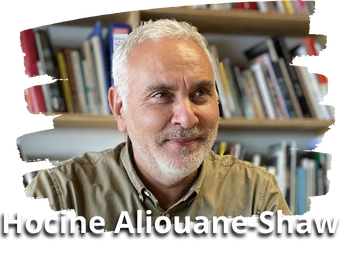
Urban designer and Associate Professor
Bordeaux National School of Architecture and Landscape (France)
Hocine Aliouane-Shaw is an architect and urban designer and Associate Professor at the Bordeaux National School of Architecture and Landscape (ENSAP Bordeaux / ENSAPBx). Holding a PhD in urban planning, he is a member of the CNRS research unit PASSAGES and convenor of the post-graduate programme Rebuilding the World. His teaching and research focus on design theory and methods, complexity in cities, and collaborative design processes that engage local communities in transforming the built environment.
The final keynote by Professor Hocine Aliouane-Shaw, representing ENSAP Bordeaux and the Freo Collective, shifted the focus to participatory processes and the narrative dimensions of the built environment. He addressed the challenge of intervening in contexts where the architect lacks familiarity with local codes, advocating for an immersive approach rooted in "making" rather than abstract planning. Through the lens of a four-year project in a working-class neighborhood in Casablanca, Morocco, Professor Hocine detailed a methodology that utilized a fictional "urban furniture factory" to engage residents in co-production, thereby bridging cultural gaps through physical labor and shared creation. The theoretical framework of his practice centers on mapping "the already there", the tangible and intangible resources, including local know-how, memories, and even local mythology, rather than treating the site as a tabula rasa. During the constraints of the COVID-19 pandemic, his team pivoted to narrative tools, developing a fable involving local "Djinns" to maintain a spiritual and community connection to the site when physical presence was impossible. Professor Hocine characterized these interventions as acts of "resistance" to standard norms, aiming to create "situations" that foster incremental change and treat design as a form of care rather than mere object production.